
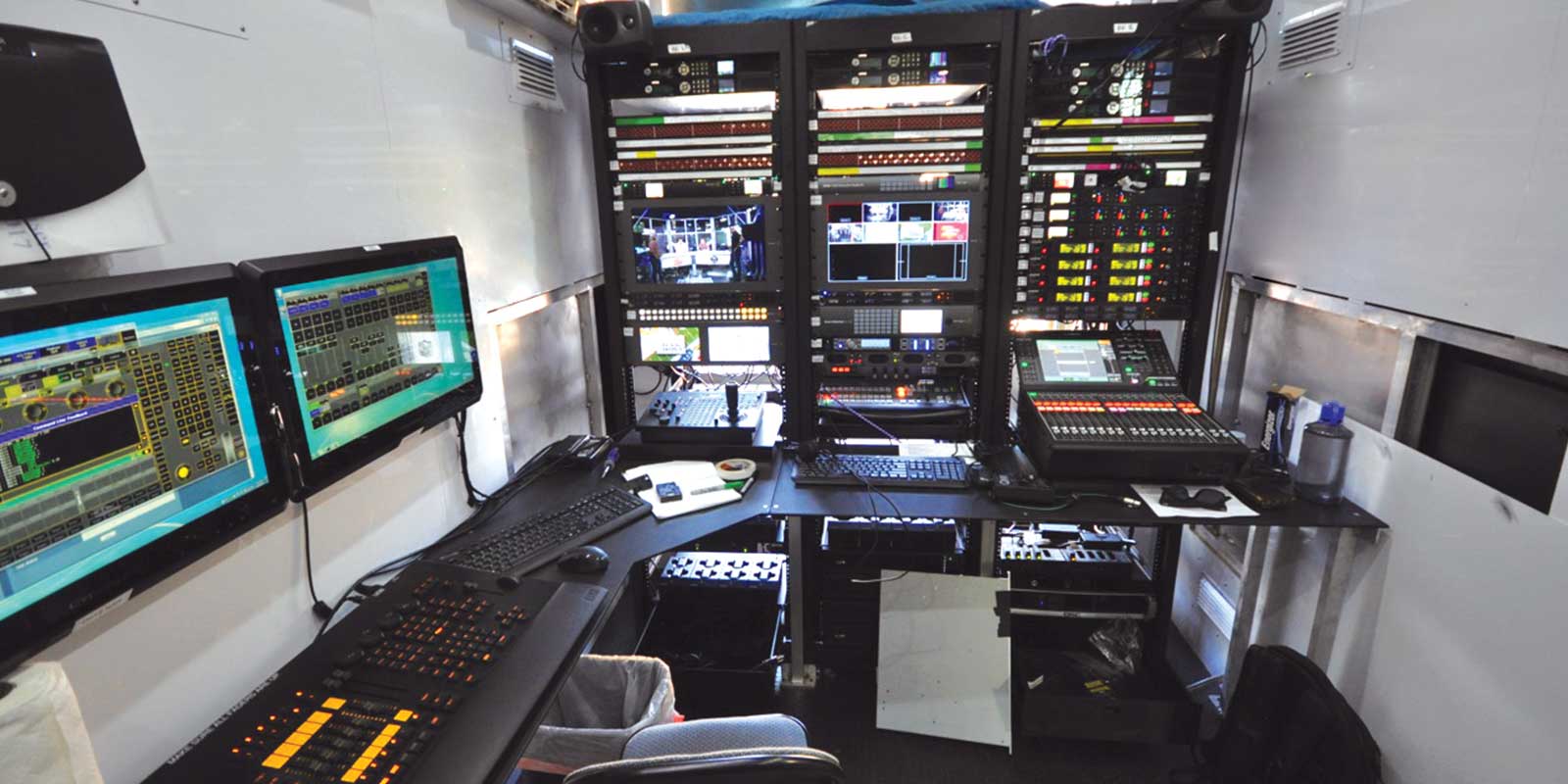
When emergencies happen or large-scale operations need to be coordinated, reliable communication and quick decision-making are critical. That’s where a mobile command center comes in. Mobile command centers bring technology, personnel, and essential equipment directly to the field, allowing organizations to manage operations wherever they’re needed.
From emergency response and disaster relief to public safety and major events, these specialized vehicles provide a centralized workspace that helps teams stay connected and respond effectively. As organizations increasingly rely on mobile operations, they have become an important tool for improving communication, coordination, and response times in the field.
What Is a Mobile Command Center?
A mobile command center is a self-contained mobile operations hub designed for communication, coordination, monitoring, and rapid response. These mobile workspaces allow organizations to manage operations remotely while keeping personnel, technology, and essential equipment together in one location.
Mobile command centers are used in a wide range of industries. Emergency responders rely on them during natural disasters, public safety agencies use them to coordinate large events and incident response, and government organizations deploy them as mobile command posts for field operations. Utility companies, healthcare providers, and businesses also use mobile command vehicles as temporary offices and coordination centers when work takes place away from a permanent facility.
The ability to deploy quickly is one of the key advantages of a mobile command center. Rather than relying on a permanent office or operations center, organizations can bring communications, technology, personnel, and essential equipment directly to the field. This flexibility helps teams respond faster, improve coordination, and continue working effectively wherever operations take them.
How Mobile Command Centers Work
A mobile command center operates as a fully functional workspace that can be deployed wherever operations are taking place. Depending on the organization’s needs, these vehicles can include communications equipment, internet and satellite connectivity, surveillance systems, dispatch workstations, onboard power, climate control, medical equipment, kitchens, and other specialized technology.
Depending on the mission, a mobile command center can be configured to support a single organization or multiple agencies working together. Custom layouts allow teams to communicate, monitor operations, share information, and make decisions without leaving the deployment site. This flexibility is especially valuable when every minute counts or when operations continue for several days.
Because everything is housed in one mobile unit, teams can communicate in real time, share information, coordinate with multiple agencies, and continue operating without relying on nearby infrastructure. That level of reliability and self-sufficiency makes mobile command centers especially valuable during emergencies, remote projects, and long-term deployments.
Industries and Organizations That Use Mobile Command Centers
Organizations across many industries rely on mobile command centers to support field operations. Law enforcement agencies, emergency management teams, military organizations, utility companies, healthcare providers, and event production teams all use these vehicles to improve communication and coordination wherever work is taking place.
Although every organization has different goals, the purpose is similar. A mobile command center can serve as an incident command post during an emergency, a temporary field office for utility crews, an operations hub during large public events, or a coordination center for disaster relief efforts. Having a dedicated mobile workspace helps teams stay organized and respond more efficiently.
The growing demand for mobile command centers reflects the need for organizations to work more efficiently in the field. Rather than relying on permanent facilities, many organizations are investing in deployable workspaces that can be set up quickly, adapt to changing conditions, and support operations wherever they’re needed.
Common Types of Mobile Command Center Vehicles
Mobile command centers can be built on a variety of platforms, including sprinter vans, box trucks, semi-trailers, expandable trailers, and specialty command vehicles. The right choice depends on factors such as team size, equipment requirements, deployment length, terrain, and mobility needs.
Larger operations often benefit from expandable or modular designs that provide additional workspace once deployed. These flexible environments allow organizations to increase capacity without sacrificing mobility, making them well suited for extended operations and complex projects.
Choosing the right platform begins with understanding how the vehicle will be used. A smaller team that responds locally may benefit from a sprinter van, while larger organizations coordinating extended deployments may need an expandable trailer or semi-trailer with additional workspace and equipment capacity.
Important Features in a Mobile Command Center
Every organization has different operational requirements, but most mobile command centers share several essential features. Reliable power systems, communications technology, workstations, climate control, surveillance equipment, secure storage, exterior lighting, and ADA-accessible designs all help teams remain productive in the field.
Planning the interior layout is just as important as selecting the equipment. A well-designed interior gives team members easy access to workstations, communications systems, technology, storage, and collaboration spaces, so personnel can focus on the mission instead of working around the vehicle. Durable construction, built-in redundancy, and flexible configurations help organizations prepare for a wide range of operating conditions, and thoughtful design improves efficiency during both routine operations and emergency deployments.
Partnering With CGS Premier for Mobile Command Centers
No two organizations operate the same way, which is why custom design is so important. CGS Premier works with clients to understand their operational goals before designing and fabricating mobile command centers that support those specific needs. From in-house fabrication and custom vehicle engineering to flexible deployment solutions and nationwide support, every project is built around how the vehicle will be used in the field.
Whether you’re planning for emergency response, disaster relief, public safety, healthcare, or corporate field operations, CGS Premier works with organizations to design and fabricate mobile command centers tailored to their operational needs. Learn more about the CGS difference, request a quote, or contact CGS Premier to discuss your project.