
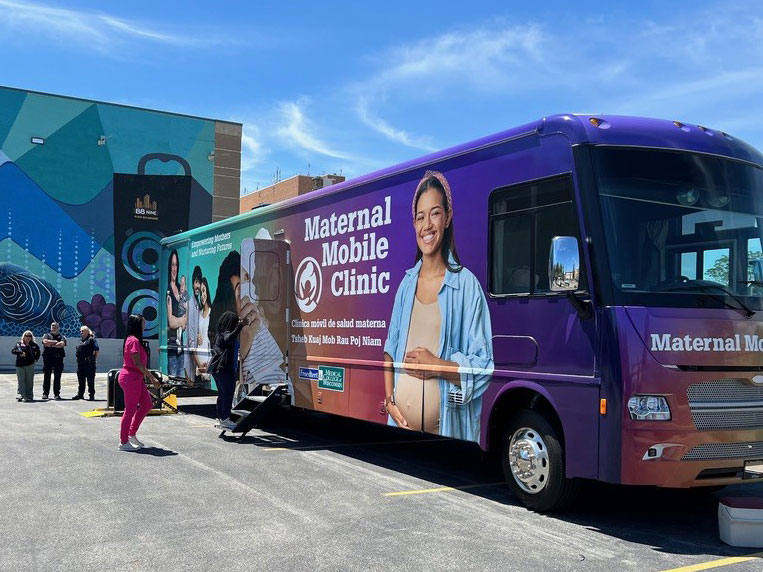
Mobile clinics play an increasingly important role in healthcare today. Traditional medical buildings are essential and typically serve patients in large numbers, but they cannot always bring healthcare directly to at-risk communities, on-site events, employer worksites, and other underserved settings.
The Importance of Medical Equipment in a Mobile Clinic
Mobile clinics are expected to provide a range of healthcare services. They also must live up to the expectations of the general public while complying with applicable local, state, and federal laws and regulations, along with any relevant healthcare standards and accreditation requirements.
Without the proper medical equipment, the services of a mobile clinic would be highly curtailed, to the point that it could no longer achieve its intended purpose. The limited space inside a mobile clinic makes it all the more important to plan the build carefully, so as to maximize the use of every available square foot. So whether you’re planning a mobile medical imaging clinic, a dental clinic, a general medical clinic, or something else, start your project with CGS Premier’s medical industry solutions.
Essential Medical Equipment For Mobile Clinics
No matter what kind of mobile clinic vehicle you’re planning, certain core equipment likely will be needed. Specialty equipment can be added or built in on top of the basic equipment. Common core equipment includes:
- Examination tables
- Vital signs monitors
- Diagnostic tools
- PPE and infection control supplies
- Refrigeration for medications and vaccines
- Medical-grade storage cabinets
- Sharps containers
- Basic laboratory equipment
When choosing equipment, prioritize safety, efficiency, compliance with applicable regulations, and of course, ease of use and ease of cleaning in compact spaces.
Finally, bear in mind that whatever equipment you choose will be subject to a significant amount of wear and tear as it is transported in mobile medical vans, trailers, or other units. You don’t want bolts to come loose, storage cabinet doors to loosen from their hinges, or other things to happen that create vulnerabilities or safety issues for your staff or your patients. Opting for durable, travel-ready equipment is essential.
Dental Equipment For Mobile Dental Clinics
Mobile dental clinics come with their own set of equipment needs on top of basic equipment. At minimum, a functional mobile dental practice requires a dental chair, an X-ray system, sterilization equipment, a suction system, a dental delivery unit, and enough storage to keep tools and supplies organized.
Because mobile dental units operate in such a limited footprint, every piece of equipment needs to be built with mobility in mind. Dental chairs are often designed to fold or adjust so they fit the space without compromising patient comfort, and delivery units tend to be compact, all-in-one systems that keep handpieces, instruments, and controls within easy reach.
Layout is just as important as the equipment itself. An efficient floor plan keeps staff from getting in each other’s way during a procedure, while a reliable power system keeps things running without interruption. Water and sanitation integration is also a must, since dental work depends on a consistent water supply and proper waste disposal.
None of this holds up, though, without solid sterilization procedures and real attention to patient comfort. You don’t want your patients to feel like they’re getting a lesser standard of care just because they’re not sitting in a traditional office.
Specialty Equipment For Eye Care, Imaging, and Med Spas
Increasingly, mobile healthcare is bringing services such as imaging, eye care, and med spas on the road. These services require specialized equipment that might not typically be found on a general mobile clinic’s list of necessary equipment.
Not only that, but the vehicles themselves need to be planned differently, according to the kinds of services provided. Due to the different kinds of services offered, mobile eye care units, mobile MRI trailers, and mobile med spas often need features such as:
- Reinforced vehicle structures
- Additional electrical capacity
- Climate-controlled environments
- Precision equipment mounting
Your equipment requirements will ultimately depend on the services your mobile clinic provides.
- Retinal imaging systems and eye exam equipment for mobile eye care units
- MRI and diagnostic imaging systems
- Specialized LED & light therapy systems
- Specialized power systems
- Spa treatment chairs
- Facial steamers
- Medical-grade refrigerators
- Diode laser devices
- And more
Technology and Connectivity Equipment
Mobile clinics rely on more than just physical equipment to function well. Technology has become just as essential, and a solid mobile setup should include access to electronic medical records (EMR), reliable Wi-Fi and cellular connectivity, telehealth systems, patient check-in systems, security and surveillance systems, and digital imaging software.
Connectivity is what ties all of this together. Without a stable connection, staff can’t access patient records on the spot, providers can’t loop in specialists remotely, and check-in systems slow to a crawl. That’s part of why mobile healthcare offers a cost-effective alternative for reaching underserved communities, since the right technology lets a small mobile team operate efficiently.
Effective technology also improves patient communication, keeps workflows moving without unnecessary delays, and opens the door to remote healthcare capabilities that weren’t possible even a few years ago, all the while remaining compliant with HIPAA and other privacy regulations. The right technology can strengthen data security, which matters even more given how much sensitive information mobile clinics handle daily.
Storage, Safety, and Utility Systems
Since they are smaller than medical facilities, and thus less crowded, mobile clinics may provide some patients with a stronger sense of safety and privacy. Provider and patient safety is certainly a special concern in mobile clinics, which is why smart planners note the CGS difference, where every inch of design is carefully considered for safety and durability. From the flooring to the hydraulics, to the suspension, to the overall structure, everything is built to the highest standards.
Accessibility should be a priority for all mobile clinics, no matter the type of service. Whether it’s access for people with disabilities or older adults, accessibility must be incorporated throughout, from the entrance to patient treatment areas.
Storage considerations are especially important, since most mobile clinics generate some form of medical waste, be it needles, bodily fluids, chemical waste, or something else.
With all that in mind, the most critical features go beyond medical supplies and include:
- HVAC and climate control
- Power generators and electrical systems
- Water and sanitation systems
- Waste disposal systems
- Lockable medical storage
How to Customize a Mobile Clinic Equipment List
Because of the diversity of services offered, there’s no universal mobile clinic equipment list. What works for a general medical van won’t work for a dental unit, and what works for a small outreach team won’t work for an organization running multiple daily clinics. Every list has to be built around the specific organization using it.
A handful of factors drive that customization. The specialty and services offered are usually the biggest factors, since a dental clinic, an imaging clinic, and a general medical clinic all need entirely different core equipment. Beyond that, the number of daily patients matters, too, since higher patient volume calls for more efficient workflows and sometimes duplicate equipment to avoid bottlenecks. Geographic coverage plays a role as well, especially for organizations covering rural or widespread areas where reliability and self-sufficiency count for more. Staffing requirements, budget, and the size of the vehicle platform all factor in, since a smaller van simply can’t hold what a full-sized coach can.
Given how many variables are at play, it’s worth working with an experienced fabricator that can help optimize layout, workflow, storage, and equipment integration from the start. Getting those details right early on saves a lot of headaches down the road.
Planning a Mobile Clinic With CGS Premier
For mobile clinic fabrication and deployable medical facilities, rely on CGS Premier. We will be your full-service custom healthcare fabrication partner for your mobile clinic build, ensuring that you get the capabilities you need to provide the services you want. Our healthcare-focused customization services include interior, foundation, RV chassis, hydraulics, roof, ISO 9001:2015 certification and a 241-point quality inspection checklist on every project.
When you need premium quality, reliability, and innovation, get in touch with CGS Premier. We integrate our proprietary systems and full in-house capabilities into every project we undertake. We can help your organization select the right platform, plan your build around your specific operational goals, and integrate the medical equipment you need for safety, productivity, and patient support. Contact CGS Premier to learn more.